Event Information
2026 Package Details:
- 4 nights accommodation at a Chicago Downtown Hotel. Arrive on Thursday, 08th Oct, depart on Monday, 12th October. (Extra nights available on request).
- Guaranteed Race Entry to the 2026 Bank of America Chicago Marathon
- Marathon Tours Welcome Event
- Marathon Tours Celebration Event
- Marathon Tours NZ team support on the ground in Chicago
- 24 x 7 Emergency support by Marathon Tours NZ
More details on the package flyer to the right (including pricing)
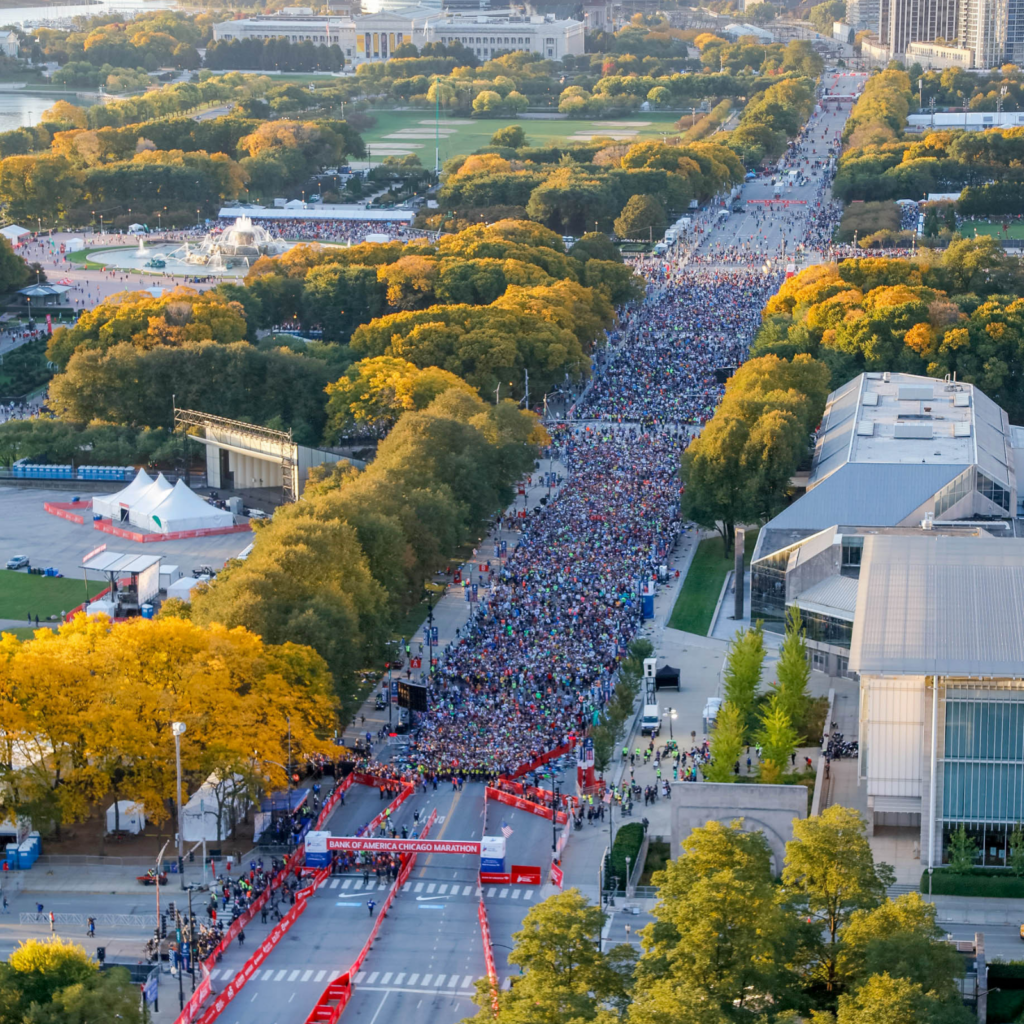
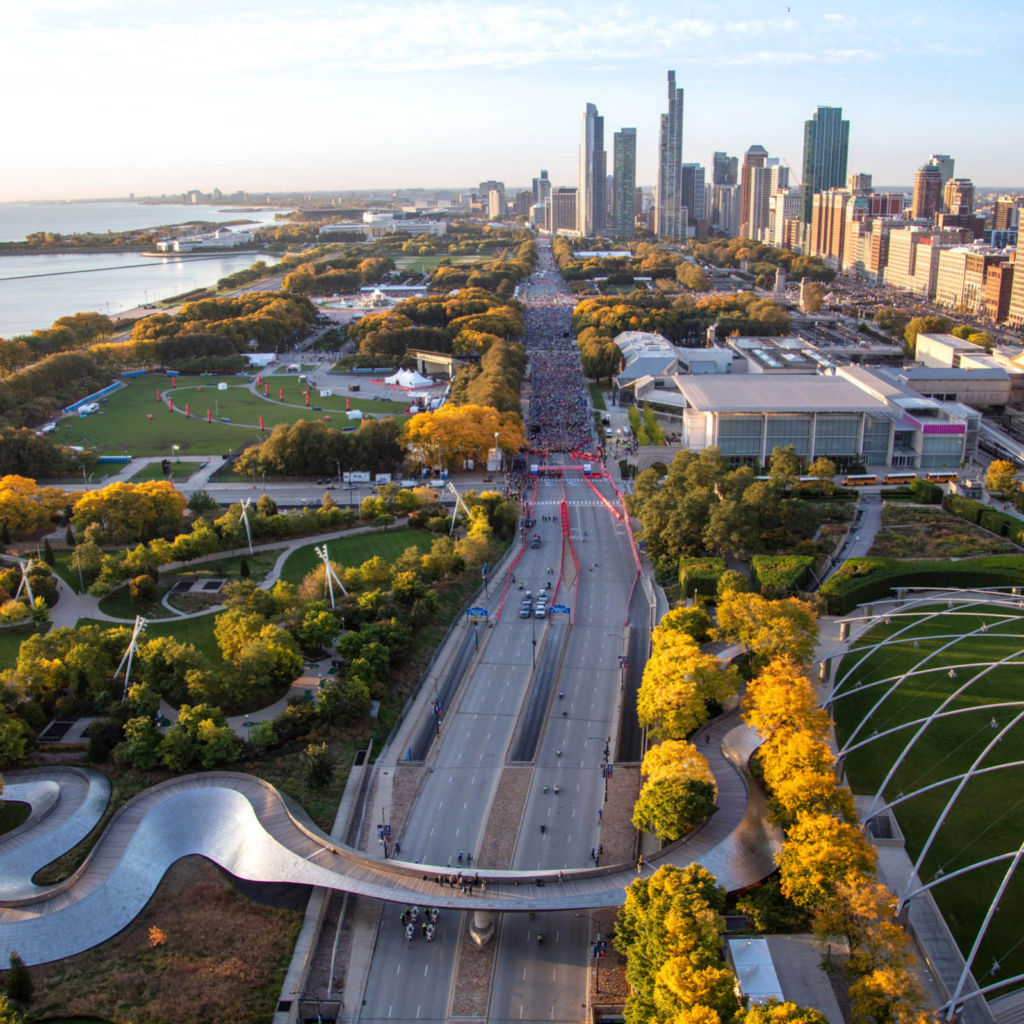
The 2026 Bank of America Chicago Marathon, taking place on Sunday, October 11, 2026, begins and ends in Grant Park and features one of the most iconic, fast, and crowd‑supported marathon courses in the world. The race follows a single‑loop, extremely flat route with a net elevation change of only about 50 feet, making it one of the most PR‑friendly courses among the six World Marathon Majors. Runners travel through 29 distinct Chicago neighbourhoods, experiencing everything from skyscraper‑lined downtown streets to vibrant cultural districts spanning the North, West, and South Sides.
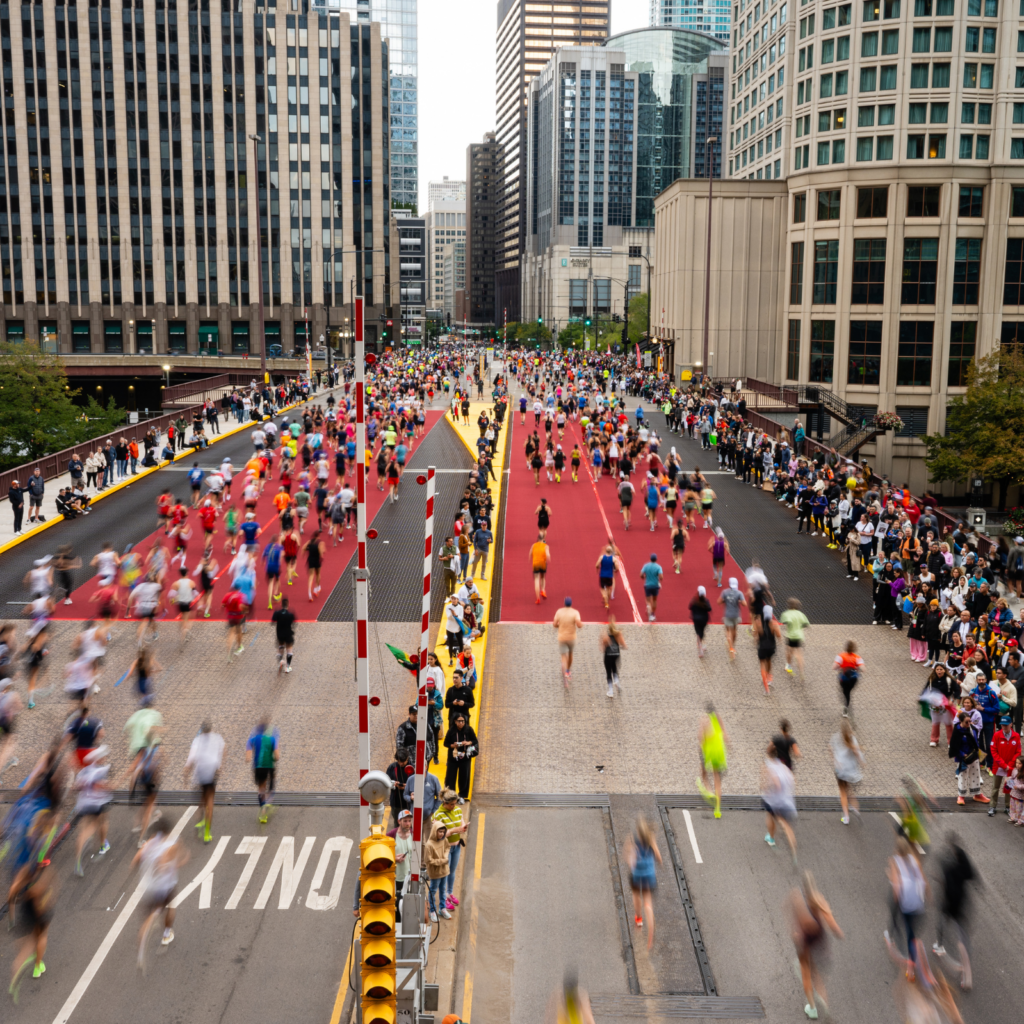
The marathon opens with an exciting start in Grant Park, quickly funnelling runners into the heart of the Loop during the first five miles. This early stretch includes three Chicago River crossings and narrow streets that can cause crowding and unreliable GPS signals, prompting athletes to pace by feel rather than watch data. Leaving downtown, runners head north through River North, with the terrain remaining flat and supported by enthusiastic spectators lining the streets.
From miles six to ten, the course passes through Old Town, Lincoln Park, Lakeview, and Boystown, some of the most energetic and memorable sections of the event. This part of the route is notoriously lively, with roaring support in Boystown and scenic stretches through parkland and residential neighborhoods. The course remains flat, and GPS signals become more stable, helping runners maintain an even effort. Even with the excitement, pacing discipline is key here, as the crowd energy can tempt runners to speed up too early. [chi.run]
Approaching the halfway point, miles eleven through thirteen guide runners south along Wells Street, through River North and back into the Loop. The halfway mark is located near Old St. Patrick’s Church, and this segment continues the pattern of flat terrain and strong spectator presence. From there, the course turns west, carrying runners into Greektown, Little Italy, and ultimately Pilsen, forming the heart of miles fourteen through twenty. These culturally rich neighbourhoods deliver some of the marathon’s most spirited cheering zones—especially Pilsen, where mariachi bands and local residents line the streets, creating a festive and emotional boost for participants.
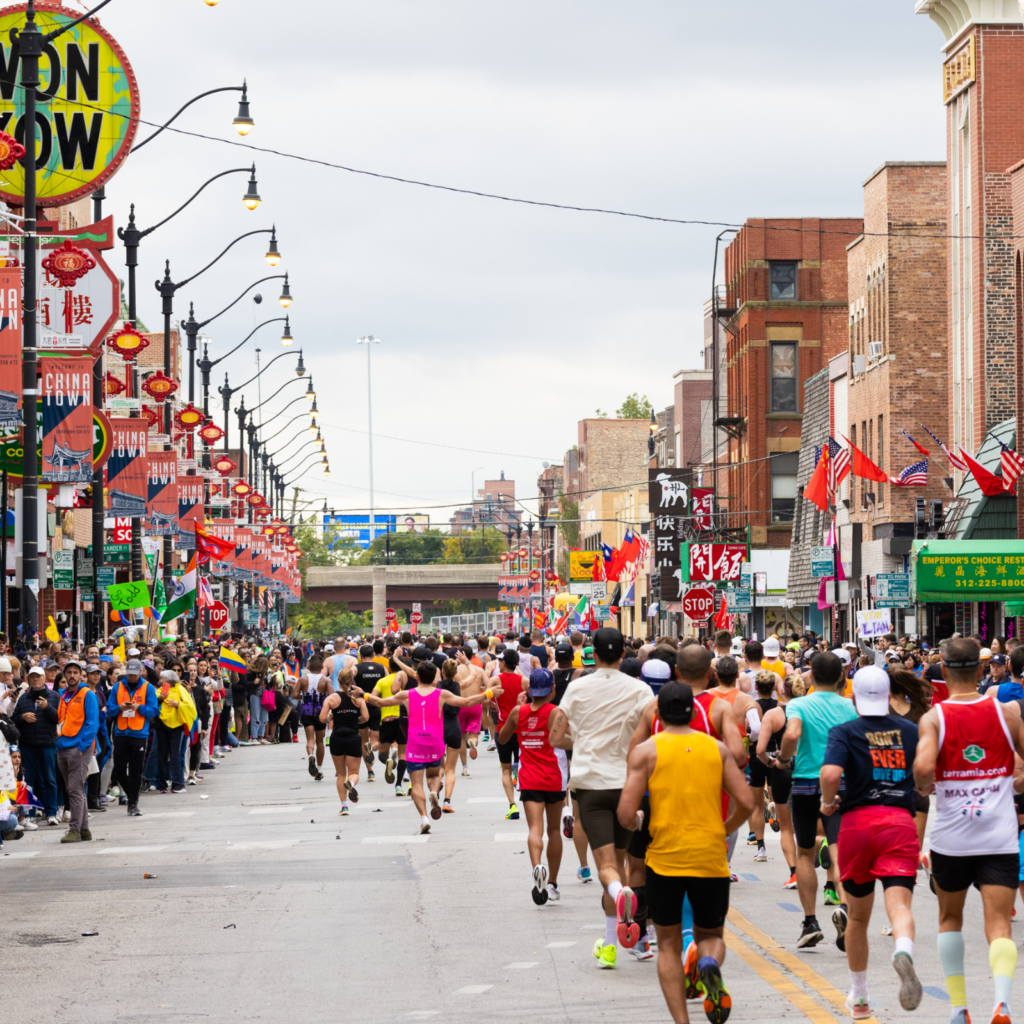
As the race reaches miles twenty‑one through twenty‑three, athletes enter Chinatown and Bronzeville, two of the most visually distinct and culturally meaningful neighbourhoods on the course. The Chinatown gate, traditional lion dancers, and dense crowd support help carry runners into the toughest miles of the marathon. Bronzeville continues the momentum with strong community energy just when fatigue becomes most intense. These final neighbourhoods mark the emotional tipping point before heading back toward downtown.
The closing miles return athletes to the South Loop, culminating in a final push up the slight incline on Roosevelt Road before descending back into Grant Park for a dramatic finish. Spectator zones—such as the official Bank of America Cheer Zone near the finish—add to the excitement as runners complete the 26.2‑mile journey. With its unparalleled crowd support, diverse neighbourhoods, and flat, fast profile, the Chicago Marathon consistently offers runners a memorable and performance‑friendly experience.
Throughout the course, runners benefit from 20 aid stations spaced approximately every one to two miles, each equipped with medical tents, toilets, Gatorade Endurance (lemon‑lime), water, and public address support. Medical coverage includes 22 on‑course medical points, with additional crews stationed between miles fourteen and fifteen and near the finish line. A strict 6 hour, 30 minute course time limit ensures safe reopening of city streets; participants must maintain a pace of at least 15 minutes per mile to receive full on‑course support. These amenities contribute to the race’s reputation for exceptional organisation and runner care.